
Conservation as Research

International Pre-Doctoral Online Program in Heritage, Museums and Material Culture.
How does a challenge encountered in practice become a research question? Bring an object, collection, archive, material practice or heritage concern and explore how to transform it into an original, theoretically informed and methodologically rigorous doctoral project or a competitive research proposal.

This international program: 

  • aims at conservators, conservation scientists, heritage practitioners, curators, artists and graduates in conservation, heritage studies, material culture, art history and related fields who are considering doctoral research or seeking to develop a research proposal. It is particularly suited to professionals and emerging researchers who have an object, collection, material practice, conservation problem or heritage situation they wish to investigate.

  • provides a structured, intellectually stimulating and collaborative learning environment combining critical theoretical engagement, methodological training, peer exchange and individual mentoring. 

  • equips participants with conceptual and methodological approaches to critically engage with scholarship, investigate objects and practices, and consider questions of research design, ethics and feasibility.

  • enables participants to progressively develop their own research ideas into doctoral or research funding proposals, articulate their potential contribution to knowledge, and gain experience presenting and discussing their projects with peers and academic mentors.

  • aims to foster a new generation of critically engaged researchers who approach conservation not merely as a technical or professional practice but as a site of knowledge production, capable of generating new perspectives on material culture, heritage, care and the relationships between objects, people and environments.


Stimmungsbild SAS Conservation as Research

Steckbrief

  • Titel/Abschluss Short Advanced Studies (SAS)
  • Dauer May – July
  • Unterrichtstage Fridays
  • Anmeldefrist April 2, 2027
  • Anzahl ECTS 6 ECTS-Credits
  • Kosten Tuition fee: CHF 3'600
    Application fee: CHF 250
  • Unterrichtssprache The language of this international cohort is English. Individual mentoring and writing clinics are offered in English and German (other languages upon request).
  • Studienort Online
  • Departement Hochschule der Künste Bern
  • Nächste Infoveranstaltung Mon, January 25, 27, 7pm
  • Nächste Durchführung Spring semester 2027

Content + Structure

Portrait

Conservation does not simply preserve knowledge—it produces it. The SAS Conservation as Research is an international pre-doctoral program that supports participants in developing questions arising from objects, collections, material practices and heritage concerns into original research projects. Situated at the intersection of conservation, heritage studies, material culture, art history and the environmental humanities, the program combines theoretical reflection, methodological training and individual mentoring to help participants develop their research ideas and prepare for doctoral study or research funding applications.

Learning outcomes

Through seminars, reading sessions, methodological workshops, proposal laboratories and individual mentoring, participants learn to formulate original research questions, situate their projects within relevant scholarly debates, develop appropriate conceptual and methodological frameworks, and consider questions of ethics, positionality and feasibility. Throughout the program, participants work towards a coherent research proposal, reflect on its potential contribution to knowledge, and gain experience presenting and discussing their research in academic contexts.
Module — Focus — Concrete output

  1. What Makes a PhD or a competitive research proposal?
    Originality, contribution, research cultures, academic vs professional knowledge
    Research problem
  2. From Object to Question
    Turning conservation challenges into research questions
    3 research questions
  3. Concepts for Conservation & Care
    History and historiography; materiality, time, change, value, authenticity, care, temporality
    Conceptual framework
  4. Methods for Material Culture
    Objects, archives, ethnography, interviews, technical/practice research
    Methods matrix
  5. Critical Conservation
    Ethics, politics, decoloniality, participation, queering, communities, activism, climate, naturecultures 
    Positionality statement
  6. Designing a Doctoral Project
    Cases, scale, comparison, feasibility, risks
    Research design
  7. Entering the PhD Landscape
    Supervisors, institutions, funding, applications, academic publishing
    PhD/funding strategy
  8. Proposal Lab & Mock Interview
    Peer review, proposal clinic, presentation and interrogation
    Draft proposal + research presentation 

The program is built around four interconnected strands:

  1. From Practice to Research — How does a professional challenge become research? Moving from case study to research question; identifying gaps; formulating hypotheses or propositions; defining an original contribution.
  2. Thinking Conservation and Care — Advanced engagement with conservation theory: permanence/change, authenticity, materiality, temporality, care, maintenance, repair, decay, heritage values, decolonial approaches, more-than-human perspectives, queering, activism and the nature/culture divide.
  3. Researching Objects and Practices — Methodological training specifically suited to conservation and related fields: object-based research, technical examination, ethnography and participant observation, interviews, archival research, oral histories, practice-based research, documentation, comparative research and interdisciplinary methods.
  4. Building the PhD / a research proposal — Developing the actual project: literature review, research design, case selection, ethics, positionality, feasibility, data management, publication strategies, finding supervisors/institutions, funding applications, proposal writing and preparing for doctoral interviews

The head of the program oversees the academic quality and coherence of the program, ensuring consistency across its modules and a meaningful connection between research and professional practice. Participants are invited to evaluate the program and provide feedback, which informs its ongoing development. Final research portfolios are assessed according to transparent criteria.

Throughout the program, you progressively develop an individual research project based on an object, collection, material practice or heritage concern from your own professional or academic context. Drawing on the theoretical, methodological and critical perspectives introduced in the modules, you prepare a Pre-Doctoral Research Portfolio comprising a draft research proposal, conceptual and methodological framework, and a reflection on ethics and feasibility. You present and discuss your project in a final research presentation and mock interview, receiving feedback from the program faculty and peers. This process enables you to transfer the knowledge and skills acquired directly into your own research practice and future doctoral or funding applications.

Title + Degree

Short Advanced Studies (SAS) in «Conservation as Research»

Team + Network

Head of Program

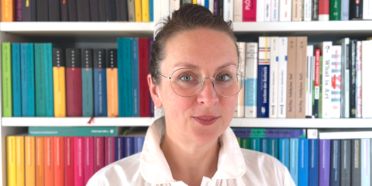
Hanna B. Hölling is a scholar, lecturer, and author whose work reimagines conservation as a critical, transformative, and politically engaged practice revealing its generative potential for new forms of knowledge. Trained as both a conservator (MA) and an art historian (PhD), her research, publications, and teaching engage with critical heritage and conservation studies, the history and theory of conservation, the politics of materiality and contemporary art and culture since the 1960s. She has led several collaborative research projects funded by the Swiss National Science Foundation, including Performance: Conservation, Materiality, Knowledge (2020–2025) and Activating Fluxus (2022–2026). She currently directs Critical Conservation (2026–2030) and the Natureculture Lab.

Among her books are Paik’s Virtual Archive: Time, Change and Materiality in Media Art (University of California Press, 2017); Revisions—Zen for Film (Bard Graduate Center, 2015); The Explicit Material: Inquiries on the Intersection of Curatorial and Conservation Cultures (Brill, 2017); Landscape (Verso, 2020); Object—Event—Performance: Art and Materiality since the 1960s (Bard Graduate Center, 2022); two volumes of Performance: The Ethics and the Politics of Conservation and Care (Routledge, Vol. 1, 2023; Vol. 2, 2025); and Activating Fluxus, Expanding Conservation (Routledge, 2026).

Hölling was Mellon Professor of Cultures of Conservation at the Bard Graduate Center in New York (2013–15), Associate Professor in the History of Art at University College London (until 2022) and Senior Fellow at the Collegium Helveticum, ETH Zurich (2025-26). She currently serves as Research Professor at the Bern University of the Arts (HKB).

Eligibility + Admission

Practising conservators, conservation scientists, graduates considering doctoral research, museum and heritage professionals, curators, and emerging researchers in conservation, heritage studies, material culture, art history and related fields seeking to develop doctoral projects or competitive research proposals.

Admission requirements

Applicants should hold a master’s degree or an equivalent academic or professional qualification. Applicants without a formal degree may also be considered for admission on the basis of substantial relevant professional experience.

Exceptions

Applicants without these formal qualifications may be considered for admission sur dossier, based on their relevant professional experience and demonstrated competencies. Admission sur dossier is subject to an individual assessment and an interview with the Head of the Program.

Application

The Head of Program makes the final admission decision based on the submitted application documents (CV, letter of motivation, and copies of relevant qualifications) and, where appropriate, a personal interview. If applications exceed the number of available places, admission will be based on applicants’ qualifications, professional experience, and motivation.

Language skills

English 

Practicalities + Application

The SAS comprises 6 ECTS credits, completed over five months on a part-time basis. 

May 14 – July 9, 2027

Fridays, starting from May 14, 2027

Application deadline: April 2, 2027

Interviews: April 8, 2027

Beginning of studies: May 14, 2027

Tuition fee: CHF 3'600
Application fee: CHF 250

The fees are tax-deductible. Payment in instalments is possible upon request. We will be happy to advise you on the available options.

The Continuing Education Regulations of Bern University of Applied Sciences, as well as the Implementation Provisions for the Continuing Education Regulations apply. The right to make changes is reserved. In case of doubt, the wording of the legal provisions and regulations shall prevail.

Application

Please submit the following documents with your application:

Copies of relevant diplomas or qualifications, plus a recent passport-style photograph

A short research sketch (maximum 1 page) outlining an object, collection, material practice, conservation challenge or heritage concern you would like to investigate, including your initial research interests and questions. A fully developed research proposal is not required.

A curriculum vitae (CV) outlining your educational background, professional experience and relevant research activities.

A short statement of motivation (maximum 300 words) explaining your interest in the program and how it relates to your academic or professional aspirations.

Please combine all application files into one PDF file.

Contact + Information

Infrastructure

The programme is fully online.


