- Freies Projekt
Laughter as a Possible Social Code Inelasticity and Redemption
In the framework of the Y-Institute's theme «Codes», HKB students joined Saša Karalić's course «Laughter as a Possible Social Code».
Steckbrief
- Student*in Luca Blum, Sophie Rebecca Bright, Talia Buffle-Benetos, Séverine Cuenat, Renaud Diacon, Jakob Dumke, Dino Feller, Léandre Joerin, Lucas Ignacio Land, Alexia Martin, Lia Porter, Ivan Plaus Pigarev, Dilana Tassin
- Studiengang
- Jahr 2025
A French philosopher and a British philosopher walk into a bar.
The French philosopher, Henry Bergson, points out: "To understand laughter, we must put it back into its natural environment, which is society." He identifies two complementary forces that life brings into play: ‘tension’ and ‘elasticity’.
"If these two forces are lacking in the body to any considerable extent, we have sickness and infirmity and accidents of every kind. If they are lacking in the mind, we find every degree of mental deficiency, every variety of insanity. Finally, if they are lacking in the character, we have cases of the gravest inadaptability to social life, which are the sources of misery."
Society, therefore, is suspicious of all kind of inelasticity – laughter functions as a corrective force and a social gesture in confronting it. Bergson justifies it as a remedy for vanity and the way society avenges itself for the liberties taken from it.
The British philosopher, Simon Critchley, is interested in the power of humor to reveal or change the situation, in its critical, messianic and redemptive function: "Humor does not redeem us from this world, but returns us to it”, he claims.
"By laughing at power, we expose its contingency; we realize that what appeared to be fixed and oppressive is in fact the emperor’s new clothes. (...) True humor changes the situation, tells us something about who we are and the sort of place we live in, and perhaps indicates to us how it might be changed."
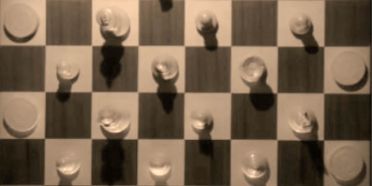
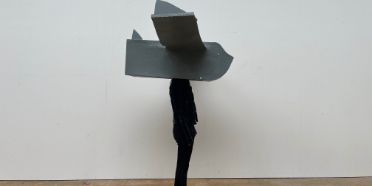
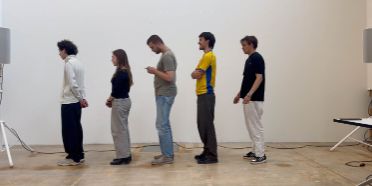
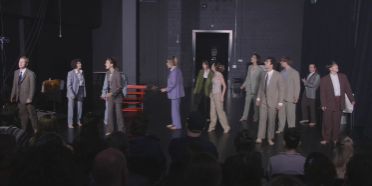
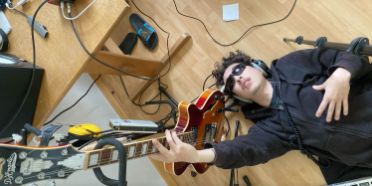
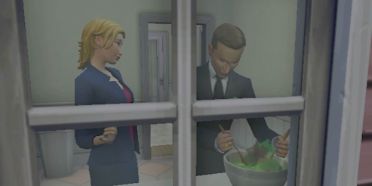
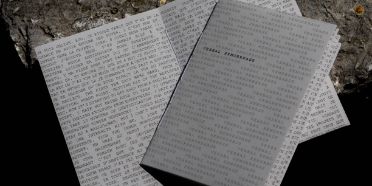
In this course, a group of HKB students – together with their tutor and actor Tillman Depping – explored the role of laughter in society and its relationship to power. Can laughter be understood as a social code – and if so, is it desirable or disruptive? What purposes does it serve? Can it be detached from entertainment and loaded with political meaning? These and other questions marked the students’ inquiry into laughter as a possible social code, reflected in the artworks they produced throughout the course. A selection of these works is presented here.